
Category: Economy

  • US Jobless Claims Fall to 194,000, the Lowest Level Since July

    US Jobless Claims Fall to 194,000, the Lowest Level Since July

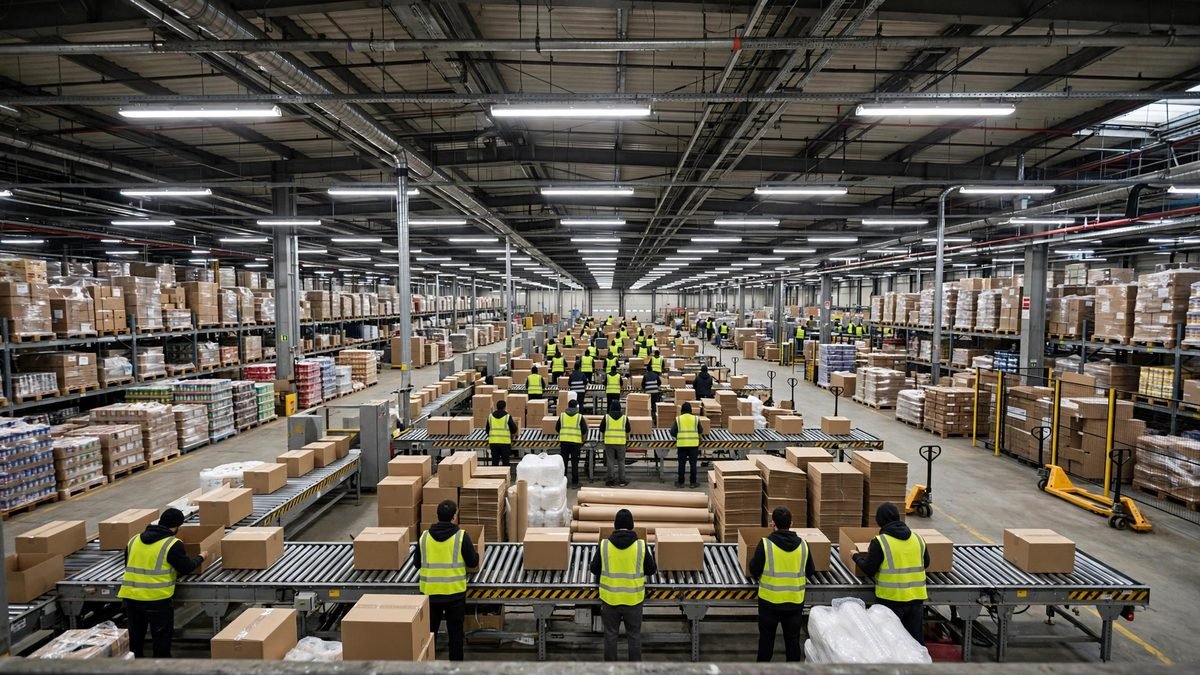
    The number of Americans filing for unemployment benefits fell to 194,000 last week, the fewest in three months, the Labor Department reported on Thursday — another sign that layoffs remain remarkably low even as high energy prices squeeze businesses and households.

    Claims dropped by 6,000 from the previous week’s revised figure of 200,000, beating economists’ expectations of around 200,000. It was the lowest reading since July, when claims briefly touched 189,000, a multi-decade low. The four-week moving average, which smooths out weekly swings, eased to 197,750. Claims have stayed at historically low levels all year, never rising above 230,000 in any single week.

    The picture is not entirely one-directional. Continuing claims — the number of people still receiving benefits after an initial week — rose by 25,000 to 1.73 million in the week ending October 10, a six-week high. In other words, few people are losing their jobs, but those who do are taking longer to find new ones. Economists have taken to describing the result as a “low-hire, low-fire” labour market: companies confident enough in their sales to hold on to staff, but cautious about expanding.

    That caution has defined the year. Employers have added an average of 68,000 jobs a month in 2026 — an improvement on a lacklustre 2025, when monthly job creation averaged just 9,700 amid high interest rates and unpredictable trade policy — but still far below the 166,000 a month averaged in 2023 and 2024, and a fraction of the pandemic-recovery boom. The unemployment rate ticked up to a still-low 4.2% last month.
    The resilience is notable given the backdrop. Energy prices have been elevated since fighting involving Iran began in late February, raising costs for fuel-dependent businesses and eroding consumer spending power. So far, that pressure has shown up in slower hiring rather than in job cuts.

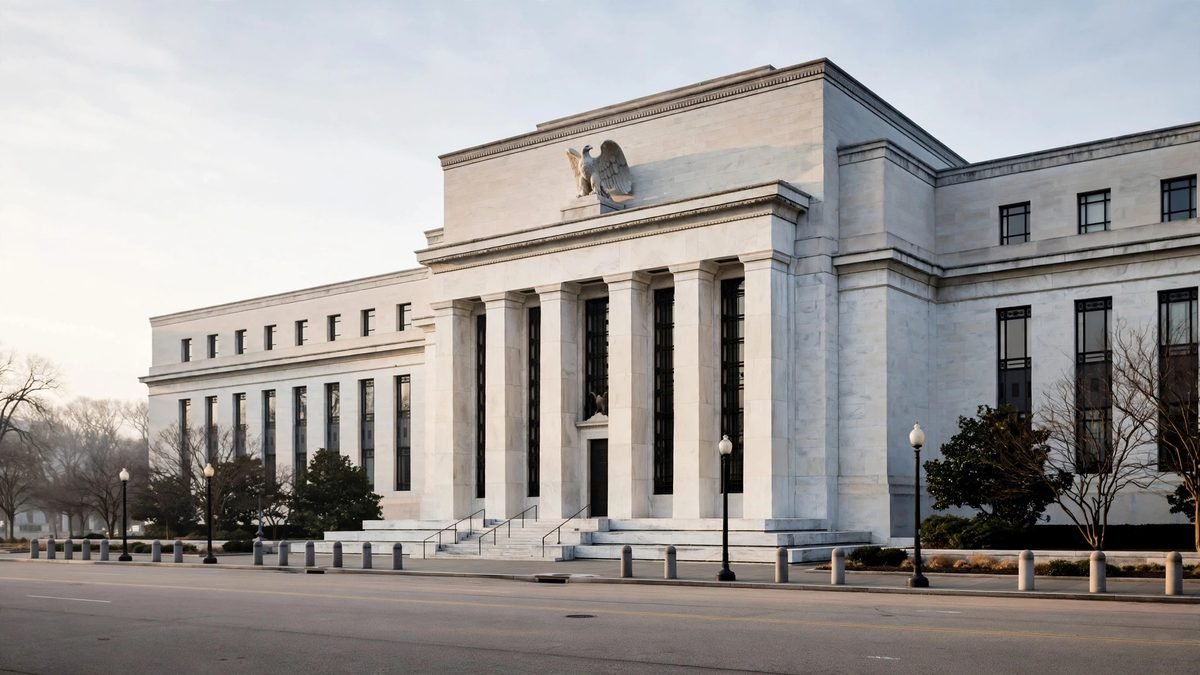
    Financial markets read the report as one more reason for the Federal Reserve to stay patient. Gold, which has been sensitive to any sign of economic weakness all year, slipped further below $4,100 an ounce after the data, as traders reasoned that a labour market this firm gives the central bank little cause to loosen policy. “Layoffs aren’t picking up, and that gives the Fed no reason to ease,” said Waleed Said, a technical analyst at GivTrade, while noting the detail most likely to be missed: with continuing claims at 1.73 million, people who do lose a job are taking longer to find another one. “Firing is low, but hiring is slowing,” he said.

    For the Federal Reserve, which meets on October 27–28, the data cuts both ways. A labour market this stable gives policymakers room to focus on inflation — itself being pushed up by energy costs — rather than rushing to support employment. But the rise in continuing claims is the detail worth watching: if the low-fire half of the market’s bargain breaks down, it usually does so quickly.
    Sources:
    Associated Press — https://www.kcau9.com/news/business/ap-us-jobless-claims-fell-to-194000-last-week-lowest-since-july/
    Bloomberg News — https://news.bloombergtax.com/payroll/us-initial-jobless-claims-fall-to-three-month-low-of-194-000-2
  • Canada Unveils C$8.7 Billion Shield for Steel and Auto Sectors Hit by US Tariffs

    Canada Unveils C$8.7 Billion Shield for Steel and Auto Sectors Hit by US Tariffs

    Canada and the province of Ontario have jointly unveiled a C$8.7 billion (about US$6.2 billion) support package for the industries hardest hit by US tariffs, in the clearest sign yet that Ottawa is planning for a long trade fight rather than a quick settlement.

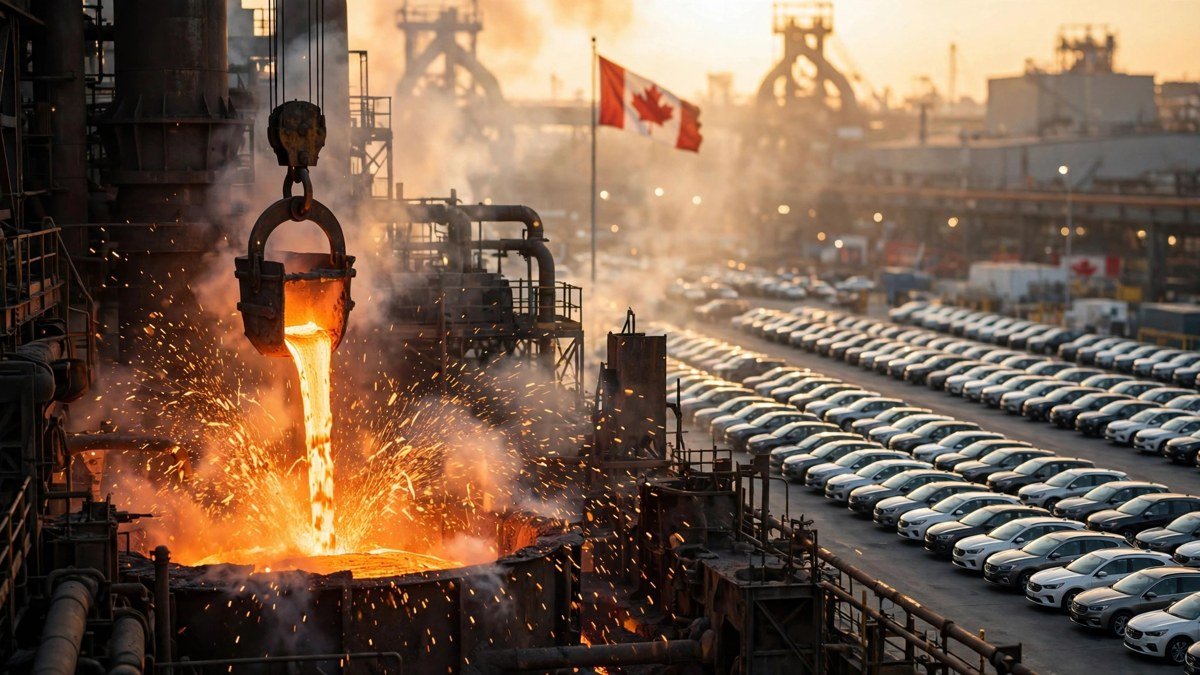
    Prime Minister Mark Carney and Ontario Premier Doug Ford announced the plan on Wednesday. The package includes about $3.7 billion for steelmakers and $1.8 billion for automakers over five years, with $1.1 billion of the auto funding coming from the federal government. It also establishes a joint steel action fund, supports upgrading car production lines for connected and electric vehicles, and invests in roads and faster approvals to secure critical mineral supply chains in Ontario’s north. The new money builds on more than C$25 billion in federal assistance already directed to workers and businesses affected by the tariffs.

    The trade damage is already measurable. Canadian auto exports to the United States have fallen by more than 10%, while US exports to Canada have dropped by more than 20% — a decline Carney said hurts families and businesses on both sides of the border. “US tariffs have upended a trade bargain that’s existed for decades,” he said. “Tariffs make both our industries weaker and reduce choice for our families.”

    The human cost was underlined the same day, when US-owned steelmaker Cleveland-Cliffs confirmed layoffs at its plant in Hamilton, Ontario. In a separate move on Thursday, Ottawa gave Cleveland-Cliffs 15 days to reverse planned job cuts at the former Stelco mill, warning that it could seek a court-ordered sale of the plant and impose daily fines if the company does not comply with employment commitments made when it bought the facility.

    Diplomatically, there is little sign of a thaw. Carney confirmed he spoke at length with President Donald Trump on Wednesday about trade, Iran and the Middle East, but signalled no breakthrough. Negotiations collapsed in August after Washington imposed 50% tariffs on roughly $20 billion of Canadian goods, prompting Canadian retaliation. Ford was blunt about the longer-term damage to the relationship. “No matter what happens in the midterms, no matter who sits in the White House, we’re not going back to the way things were,” he said.

    Ontario is Canada’s manufacturing heartland, and its car and steel plants were built around frictionless cross-border trade — parts routinely cross the border several times before a vehicle is finished. That integration, once the industry’s great strength, is now its exposure. The package’s logic is to buy time: keep plants and workers in place, modernise production, and develop alternative supply chains and markets — including a push to deepen trade ties with partners such as Türkiye, where Carney travelled this week — while the two countries’ political relationship is rebuilt, or not.

    Sources:
    CGTN — https://news.cgtn.com/news/2026-10-22/Canada-and-Ontario-unveil-C-8-7-billion-package-to-counter-US-tariffs-1RrjHrEcD9S/p.html
    Tert.am — https://tert.am/en/news/2026/10/22/Canada/4287742