Blog

  • Champions League: Como Humiliate Man United as Bayern and Arsenal Share a Thriller

    Champions League: Como Humiliate Man United as Bayern and Arsenal Share a Thriller

    The Champions League served up its most dramatic night of the season on Wednesday, with a humiliating upset for Manchester United in Italy and a heavyweight draw between Bayern Munich and Arsenal in Germany headlining Matchday 3 of the league phase.

    The shock of the night came in Como, where the Italian side thrashed Manchester United 4-1 — a result ESPN described as one of the worst defeats in the club’s European history. Michael Carrick’s side arrived with high expectations and left with questions that will not go away quickly, torn apart by a team playing its first season in the competition.

    In Munich, the night’s other marquee fixture lived up to its billing. Bayern Munich and Arsenal drew 2-2 at the Allianz Arena in a back-and-forth contest that neither side could quite win. Harry Kane, honest as ever against his Premier League rivals, said “probably a draw was a fair result overall.”

    Real Madrid kept up their perfect start under José Mourinho, beating RB Leipzig 4-1. Goals from Bernardo Silva and Arda Guler on either side of half-time set the tone, and Kylian Mbappé made it 12 goals in 12 games this season before Tidiam Gomis and Yan Diomande struck late for the visitors. Madrid are one of five teams with three wins from three.

    Aston Villa are also perfect after three games, beating Viking 3-1. Inter ground out a 1-0 win at Shakhtar Donetsk despite playing with ten men after Alessandro Bastoni’s dismissal — Carlos Augusto’s 77th-minute strike the difference.

    Galatasaray earned their first Champions League victory, 4-2 over Lille, with Victor Osimhen sealing it against his old club. Elsewhere, Club Brugge beat Lens 3-0, Real Betis edged Feyenoord 1-0, and LASK celebrated their first-ever Champions League win by beating Sporting CP 3-2.

    The results leave the league-phase table taking shape, with the usual giants joined — for now — by some very unlikely company at the top.

    Sources: ESPN (https://www.espn.ph/football/story/_/id/50191263/champions-league-live-updates-manchester-united-bayern-arsenal-real-madrid) and UEFA.com (https://www.uefa.com/uefachampionsleague/news/02aa-21e20b093685-f5cf9ebeb7a6-1000–champions-league-matchday-3-wednesday-highlights-and-rou/).


  • Two Killed in Attack on Saudi Airport as Strikes on the Kingdom Escalate

    Two Killed in Attack on Saudi Airport as Strikes on the Kingdom Escalate

    Two people were killed and eight injured in an attack on Saudi Arabia’s King Fahd International Airport on Wednesday evening, the latest in a rapidly escalating series of cross-border strikes that have shaken the kingdom in recent weeks.

    The victims were an Indian national and a Saudi citizen, according to Saudi Arabia’s General Authority of Civil Aviation. Airport operations in Dammam — Saudi Arabia’s eastern oil hub — were briefly disrupted before resuming.

    The same day, debris from an intercepted drone killed a Filipino and a Nepali national at Aramco’s Shaybah oil field, the Saudi Ministry of Energy said.

    The attacks were claimed by Yemen’s Houthi movement. Military spokesman Yehya Saree said on the Houthi-aligned Almasirah television channel that the group had carried out four operations in 48 hours using ballistic missiles and drones — targeting the Saudi Defence Ministry in Riyadh, the Dammam airport, an Aramco facility in Yanbu, and Abha airport. Saree vowed “siege for siege and escalation for escalation” until, in his words, Saudi Arabia lifts its blockade. These claims could not be independently verified.

    The Saudi-led coalition said it had intercepted four drones over the Riyadh and Medina regions, with no casualties reported. Aramco told staff to evacuate its Dhahran headquarters and work remotely, according to people familiar with the matter. The US State Department ordered the departure of non-emergency US government employees and their family members from Saudi Arabia, citing attacks on civilian airports and critical infrastructure and severe travel disruptions.

    The escalation has been building for weeks. A strike on Riyadh’s airport earlier this month killed at least 12 people — the deadliest series of attacks on Saudi Arabia in a decade, according to the Wall Street Journal. The escalation follows the collapse in July of the 2022 ceasefire, amid the wider US-Iran war.

    Saudi authorities have not confirmed the Houthis’ account of the full scope of Wednesday’s operations. The conflict’s return to open escalation marks a sharp reversal of years of relative quiet, and leaves the region’s energy infrastructure — and the civilians working in it — exposed.

    Sources: The Wall Street Journal (https://www.wsj.com/world/middle-east/one-person-killed-and-8-injured-in-airport-attack-in-saudi-arabia-4c84d5d4) and The Hindu (https://www.thehindu.com/news/national/indian-national-killed-in-saudi-dammam-airport-attack-others-injured/article71610871.ece).

  • Barclays to Cut 5,000 Jobs in AI-Driven Cost Push as Quarterly Profit Misses

    Barclays to Cut 5,000 Jobs in AI-Driven Cost Push as Quarterly Profit Misses

    Barclays will cut around 5,000 jobs — roughly 5% of its workforce — by the end of 2026, the bank announced on Thursday, as it leans on artificial intelligence and a simplification of its organisation to strip out costs. The move came alongside third-quarter results that beat last year’s but fell short of what analysts expected.

    Pre-tax profit for the quarter was £2.3 billion, up 12% from a year earlier but below the £2.4 billion consensus estimate. Revenue rose 3% to £7.4 billion. The bank also took a further £201 million in “structural cost actions” during the quarter and expects around £600 million of such costs for the full year.

    Finance chief Anna Cross was unusually direct about the role of technology in the reductions. “AI makes our people more productive,” she told a press briefing, framing the cuts as “organisational simplification and technology change efficiency driven by AI.” About 60% of the eliminated roles are in support functions, including software developers — a striking detail, since developers are usually among the hardest roles to cut.

    Roughly 1,000 of the jobs have already gone, with the rest to follow over the coming year.

    The results exposed a familiar weak spot. Income from fixed-income trading — the bond, currency and commodities desks — dropped 19% in the quarter, continuing a run of underperformance against Wall Street rivals. Chief executive C.S. Venkatakrishnan did not hide his frustration: “I am disappointed, and you can be sure this will get my attention.”

    Barclays is not alone among big European banks in linking job cuts to AI-driven productivity, but few have put the connection so bluntly. The announcement will add fuel to a debate already raging across the UK financial sector: whether AI is reshaping how banks work — or simply giving chief executives cover for cuts they would have made anyway.

    Sources: Reuters via Business Standard (https://www.business-standard.com/companies/news/barclays-to-cut-5-000-jobs-in-ai-led-cost-drive-as-q3-profit-rises-12-126102201741_1.html) and AFP via Daily Sabah (https://www.dailysabah.com/business/finance/british-banking-giant-barclays-to-cut-about-5000-jobs-amid-ai-drive).

  • Moderna’s Cancer Vaccine Data Leaks Early, Triggering Record Stock Plunge

    Moderna’s Cancer Vaccine Data Leaks Early, Triggering Record Stock Plunge

    One of the most closely watched experiments in cancer medicine hit the public in the least orderly way possible on Thursday, when detailed results from a late-stage trial of Moderna’s personalised melanoma vaccine leaked online ahead of schedule — and the market’s reaction wiped around $24 billion from the company’s value.

    The data, for a treatment called intismeran developed jointly by Moderna and Merck, appeared on the oncology website Oncology Central before its planned presentation at the ESMO cancer conference in Madrid on Saturday. The leak forced the conference organisers to lift their embargo, and the two companies released the full results themselves.

    On the numbers, the trial was a success. More than 1,100 high-risk melanoma patients who had undergone surgery received either intismeran plus Merck’s Keytruda or Keytruda alone. The combination reduced the risk of cancer returning or of death by 42%, and cut the risk of distant metastasis or death by 38%. About 82% of patients who received the vaccine were alive without their melanoma returning at two years, compared with roughly 70% on Keytruda alone.

    Dean Li, president of Merck Research Laboratories, called the study “one of the most significant advances in melanoma treatment since the advent of immunotherapy.”

    Analysts agreed the science was strong. UBS’s Michael Yee described the data as “solid”; William Blair’s Myles Minter went further, calling it “great.”

    The share price told a different story. Moderna stock sank as much as 25.2% to $183.88 during Thursday’s session — its steepest one-day fall on record — before closing 17.6% lower. Merck shares slipped about 1%.

    The rout, described by analysts as a classic “sell-the-news” reaction, followed a months-long rally that had lifted Moderna’s stock more than 500% this year as investors piled in ahead of the trial readout. With expectations set so high, strong-but-not-miraculous data gave holders an excuse to take profits.

    Overall survival data from the trial is not yet mature, though the companies said it shows a “favourable trend.” Moderna and Merck said they are engaging with regulators and plan to pursue approval. The formal presentation of the results is still scheduled for Saturday in Madrid.

    Sources: Reuters (https://www.reuters.com/business/healthcare-pharmaceuticals/moderna-sheds-about-24-billion-cancer-vaccine-data-triggers-sell-the-news-2026-10-22/) and MarketWatch (https://www.marketwatch.com/story/modernas-stock-tumbles-after-reported-leak-of-data-for-cancer-vaccine-dcc897c1).

  • Anthropic Presses Ahead With Mid-November IPO as Other AI Listings Stall

    Anthropic Presses Ahead With Mid-November IPO as Other AI Listings Stall

    The autumn rush of artificial intelligence companies to the stock market has narrowed to a single name. Anthropic is pressing ahead with plans to hold its initial public offering in mid-November, even as a string of other AI-related listings have been shelved or postponed, according to people familiar with the matter.

    The company’s prospectus could become public as early as late October, and Anthropic is expected to begin marketing its shares to prospective investors during the week of November 9, Reuters reported on Thursday. The people cautioned that the timetable remains subject to change.

    It is an unusually lonely path to the public markets. A technology IPO calendar that looked busy a few months ago has been thinned by market jitters: Switch, Nscale, SB Energy, Elice, AirTrunk REIT and Firmus have all delayed or withdrawn their listings. Investors have grown more cautious as interest rates rise and shares of AI infrastructure operators such as CoreWeave sell off, prompting harder questions about whether the industry’s enormous data-centre spending will ever be paid back.

    Nscale’s delay was partly driven by comments from staff at the US Securities and Exchange Commission, underscoring the regulatory glare now falling on the sector.

    The numbers inside Anthropic’s draft prospectus, reviewed by The Wall Street Journal, help explain both the confidence and the questions. Revenue reached $16.3 billion in the first half of 2026, but the company recorded a net loss of more than $80 billion over the same period — largely an accounting adjustment tied to financing agreements, rather than day-to-day cash losses. Roughly one-fifth of that revenue came from just two customers, a concentration that will draw scrutiny from new investors.

    The document also signals that Anthropic could spend as much as $750 billion in the coming years on computing capacity, including agreements that are still being negotiated — a figure that shows just how far the industry’s appetite for chips and data centres still stretches.

    On valuation, expectations remain stratospheric. People familiar with the company’s thinking believe a figure near $1.5 trillion is plausible, while the Journal’s review of the draft prospectus referenced a potential $2 trillion valuation.

    Anthropic did not immediately respond to Reuters’ request for comment.

    Sources: Reuters (https://www.reuters.com/legal/transactional/anthropic-ipo-stands-alone-ai-market-jitters-sideline-others-2026-10-22/) and The Wall Street Journal (https://www.wsj.com/tech/ai/anthropic-revenue-growth-ipo-accaf0f1).

  • Primate Feared Extinct for Nearly a Century Rediscovered on an Indonesian Island

    Primate Feared Extinct for Nearly a Century Rediscovered on an Indonesian Island

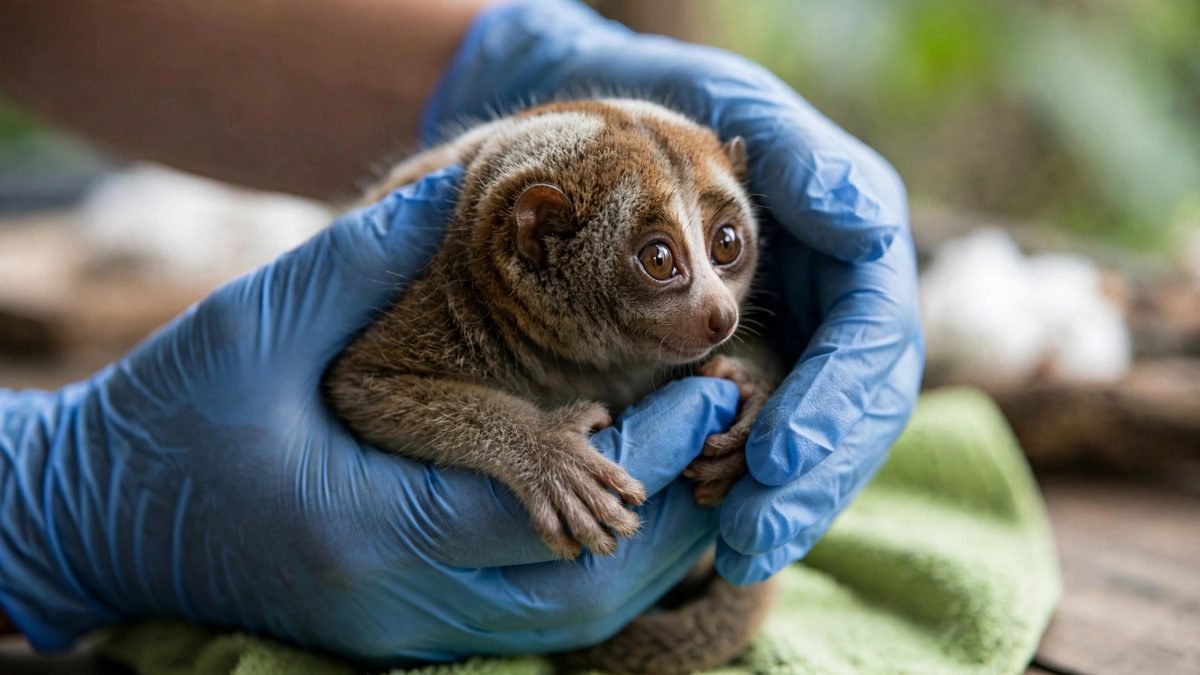
    For almost a hundred years, science had no answer to a simple question: did the Bangka slow loris still exist? The small, big-eyed primate was last scientifically documented in the 1930s, was listed as critically endangered and possibly extinct, and had quietly slipped toward becoming another name on the list of species lost before they were ever properly studied.

    Now the answer is in, and it is a happy one. A new study published in the journal Spixiana confirms that the Bangka slow loris is alive on the Indonesian island of Bangka, off the south-eastern coast of Sumatra. The evidence did not come from a big expedition. It came from the logbooks of the Alobi Wildlife Rescue Center, whose staff have spent more than a decade responding to calls from residents who found lorises in gardens, along roadsides and on power lines. Between 2015 and 2025, Alobi recorded more than 90 of the animals, across all four of the island’s regencies and the city of Pangkal Pinang. Of those, 86 recovered and were released back into the wild at seven sites chosen for their remaining forest cover.

    “The Bangka slow loris is still alive,” said Timon Glaw, a conservation researcher at Vienna’s Haus des Meeres Aqua Terra Zoo and one of the study’s authors. “What I find particularly astonishing is that such a charismatic and distinctive primate has received so little scientific attention for nearly a century. Its rediscovery also offers hope that other species feared to be extinct may still survive in places where scientists have not looked for decades. After all, Bangka is just about an hour flight from Jakarta, one of the largest cities in the world.”

    The animal itself is remarkable. Slow lorises are the only venomous primates: they lick a gland inside the upper arm and mix the secretion with saliva to produce a defensive bite. The Bangka species, Nycticebus bancanus, is a small, nocturnal tree-dweller with reddish-brown fur, a pale facial mask and huge round eyes for seeing in the dark. It was first described in 1906 but only recognised as a species in its own right in 2013 — six years before its records simply stop.

    Survival is not the same as safety. Bangka’s forests have been shrinking under pressure from tin mining — much of it illegal — and large-scale clearing for oil palm plantations, while roads, power lines and the pet trade pose further threats. “We are glad to contribute to the scientific record to show that the Bangka slow loris is not lost, but the species is still very close to extinction,” said Langka Sani, Alobi’s director. The study’s authors recommend a long-term conservation programme built on population surveys, genetic research and, above all, protection of the forest fragments that remain.

    The rediscovery carries a wider lesson that conservationists are fond of repeating because it keeps proving true: a species can vanish from the scientific record without vanishing from the lives of the people who share its home. The loris was never lost to the residents of Bangka. It just took science ninety years to ask them.

    Sources:
    Reuters — https://www.reuters.com/business/environment/feared-extinct-bangka-slow-loris-primate-rediscovered-indonesia-2026-10-20/
    Re:wild — https://www.rewild.org/press/bangka-slow-loris-rediscovered

  • Harry Brook Smashes the Fastest Double Century in One-Day International History

    Harry Brook Smashes the Fastest Double Century in One-Day International History

    Harry Brook rewrote the one-day record books in Rawalpindi on Thursday, blasting 202 from 116 balls against Sri Lanka to become the first Englishman to score a double century in a one-day international — and the fastest man ever to reach the milestone in the format’s 55-year history.

    The England captain reached 200 in just 114 deliveries, beating the previous record of 117 balls set by India’s Shubman Gill against West Indies only last month. His innings, a mixture of scoops, reverse-scoops and flat-batted power, contained 21 fours and 10 sixes, and it carried England to 429 for 4 — the first 400-plus total in an ODI played in Pakistan, and the highest score Sri Lanka have ever conceded.

    Brook came in at number four in the 17th over, after openers Tom Banton (50) and Ben Duckett (29) had put on 74. What followed was sustained, almost casual destruction. He added 159 for the third wicket with Joe Root, then 185 from just 79 balls with Will Jacks, who finished unbeaten on 66 from 30 deliveries as England plundered 156 runs from the final 10 overs. Fittingly, Brook reached his double hundred with a deft paddle-sweep for four in the last over, then holed out to deep point off the innings’ final ball, bowled by Janith Liyanage, to warm applause.

    The records stacked up quickly. Brook eclipsed Ben Stokes’ 182 as England’s highest individual ODI score. His 202 is also the highest score by a non-opener in ODI history, surpassing Glenn Maxwell’s 201 not out against Afghanistan at the 2023 World Cup, and he becomes only the fourth captain to score an ODI double century. He is also just the second player, after Chris Gayle, to hold the all-format “3-2-1”: a Test triple century, an ODI double hundred and a T20 international century. His 174 runs against the fast bowlers, from 90 balls, is the most any batter has scored against pace in a single ODI innings.

    There was a milestone for Root, too: his 69 from 66 balls made him the first England batter to pass 8,000 ODI runs, in his 197th match.

    The context gave the innings extra value. Both England and Sri Lanka went into the match looking for their first win of the tri-series after losing their openers to hosts Pakistan, and England now have a formidable total on the board and net-run-rate momentum to match. With the 2027 World Cup approaching, England’s white-ball rebuild under Brook has rarely looked more convincing.

    Sources:
    Reuters — https://www.reuters.com/sports/cricket/englands-magnificent-brook-hits-fastest-odi-double-century-2026-10-22/
    ESPNcricinfo — https://www.cricinfo.com/series/pakistan-odi-tri-series-2026-27-1550706/england-vs-sri-lanka-3rd-match-1550715/match-report

  • Early Voting Surges in US Senate Battlegrounds Ahead of the Midterm Elections

    Early Voting Surges in US Senate Battlegrounds Ahead of the Midterm Elections

    With less than two weeks to go before America’s midterm elections, voters are casting ballots early in numbers well above the last midterm cycle — particularly in the states expected to decide which party controls the US Senate.

    An Associated Press analysis of advance ballots cast through Tuesday found that more than 13 million mail-in and early in-person votes have already been recorded nationally, compared with 9 million at the same point in 2022. In Texas, early voting is up 74% on four years ago. Kansas has more than doubled its early turnout, while Maine, North Carolina and Ohio have each registered increases of more than 30% in combined early in-person and mail voting.

    The pattern matters because of where it is happening. Democrats are trying to flip Republican-held Senate seats in each of those states, and in most of them Republicans account for a smaller share of advance voters than they did in 2022 — a shift that has encouraged Democrats and unsettled Republican strategists in places the party did not expect to have to defend this year. The AP points to dissatisfaction with President Donald Trump’s tariffs, the persistently high cost of living, and the high petrol and diesel prices caused by the war involving Iran as sources of political blowback against the governing party.

    Midterm elections usually favour the party out of power, and this year’s environment is inverted from 2022: Republicans now hold both chambers of Congress and the White House, and are defending that record rather than attacking the other side’s. Control of the House of Representatives is also at stake on November 3, with Democratic leader Hakeem Jeffries expressing confidence that his party can regain the chamber.

    Analysts urge caution about reading too much into the figures, however. Early turnout measures enthusiasm and habit, not outcomes: it does not show how the votes will split, and some of the increase simply reflects states that have expanded early voting opportunities since 2022 or made more of their data available. A surge driven by one side’s supporters can also be cancelled out by the other side’s voters on election day itself.

    Still, the geography of the surge — deep-red Kansas doubling its turnout, Texas up by three quarters — suggests an electorate that is more engaged, and more volatile, than midterm voters usually are. Both campaigns now have the same job for the remaining days: make sure the enthusiasm showing up in the early numbers survives until the polls close.

    Sources:
    Associated Press — https://www.kcau9.com/news/politics/ap-many-states-deciding-control-of-the-senate-are-seeing-a-big-boost-in-early-voting-ap-analysis-shows/
    The Korea Herald — https://m.koreaherald.com/article/10911398

  • US Jobless Claims Fall to 194,000, the Lowest Level Since July

    US Jobless Claims Fall to 194,000, the Lowest Level Since July

    The number of Americans filing for unemployment benefits fell to 194,000 last week, the fewest in three months, the Labor Department reported on Thursday — another sign that layoffs remain remarkably low even as high energy prices squeeze businesses and households.

    Claims dropped by 6,000 from the previous week’s revised figure of 200,000, beating economists’ expectations of around 200,000. It was the lowest reading since July, when claims briefly touched 189,000, a multi-decade low. The four-week moving average, which smooths out weekly swings, eased to 197,750. Claims have stayed at historically low levels all year, never rising above 230,000 in any single week.

    The picture is not entirely one-directional. Continuing claims — the number of people still receiving benefits after an initial week — rose by 25,000 to 1.73 million in the week ending October 10, a six-week high. In other words, few people are losing their jobs, but those who do are taking longer to find new ones. Economists have taken to describing the result as a “low-hire, low-fire” labour market: companies confident enough in their sales to hold on to staff, but cautious about expanding.

    That caution has defined the year. Employers have added an average of 68,000 jobs a month in 2026 — an improvement on a lacklustre 2025, when monthly job creation averaged just 9,700 amid high interest rates and unpredictable trade policy — but still far below the 166,000 a month averaged in 2023 and 2024, and a fraction of the pandemic-recovery boom. The unemployment rate ticked up to a still-low 4.2% last month.

    The resilience is notable given the backdrop. Energy prices have been elevated since fighting involving Iran began in late February, raising costs for fuel-dependent businesses and eroding consumer spending power. So far, that pressure has shown up in slower hiring rather than in job cuts.

    Financial markets read the report as one more reason for the Federal Reserve to stay patient. Gold, which has been sensitive to any sign of economic weakness all year, slipped further below $4,100 an ounce after the data, as traders reasoned that a labour market this firm gives the central bank little cause to loosen policy. “Layoffs aren’t picking up, and that gives the Fed no reason to ease,” said Waleed Said, a technical analyst at GivTrade, while noting the detail most likely to be missed: with continuing claims at 1.73 million, people who do lose a job are taking longer to find another one. “Firing is low, but hiring is slowing,” he said.

    For the Federal Reserve, which meets on October 27–28, the data cuts both ways. A labour market this stable gives policymakers room to focus on inflation — itself being pushed up by energy costs — rather than rushing to support employment. But the rise in continuing claims is the detail worth watching: if the low-fire half of the market’s bargain breaks down, it usually does so quickly.

    Sources:
    Associated Press — https://www.kcau9.com/news/business/ap-us-jobless-claims-fell-to-194000-last-week-lowest-since-july/
    Bloomberg News — https://news.bloombergtax.com/payroll/us-initial-jobless-claims-fall-to-three-month-low-of-194-000-2

  • Poland to Become Second EU Country in Global Network Overseeing AI in Healthcare

    Poland to Become Second EU Country in Global Network Overseeing AI in Healthcare

    Poland has committed to join a global network of regulators overseeing the use of artificial intelligence in healthcare, becoming only the second European Union member state to do so as Europe’s new AI rules begin to bite and concerns grow about unpredictable behaviour by medical AI systems.

    The agreement, announced on Thursday, is a memorandum of understanding between Poland’s Ministry of Health and HealthAI, the Geneva-based agency that runs the Global Regulatory Network (GRN). The document was drafted earlier this year at the AIMed 2026 conference in Kraków by Deputy Health Minister Tomasz Maciejewski and HealthAI’s chief executive, Dr Ricardo Baptista Leite, and it sets out a one-year cooperation framework to prepare Poland for full membership. There is no fixed timeline for accession, a HealthAI spokesperson said.

    Portugal is the only other EU country in the network. Its other members include Britain, India, Brazil, Singapore, the Philippines, Indonesia, Vietnam, Zambia and Peru. Membership gives regulators access to AI healthcare tools that other regulators have already reviewed, and to a real-time warning system through which countries share reports of harmful incidents — a kind of early-warning radar for when a medical algorithm goes wrong somewhere in the world.

    As part of the pathway, Poland takes a seat in the Leadership Group of HealthAI’s Community of Practice, where its officials can exchange experience with government and regulatory authorities from around 30 countries. HealthAI and the Polish health ministry will also jointly organise a meeting in Poland bringing together government, regulators, academics, clinicians and health-tech companies to build national agreement on how AI should be governed in the health system.

    “Poland’s intention to join the GRN reflects a commitment to international collaboration and alignment, ensuring that innovation in AI translates into better health outcomes for Poland and for Europe,” Leite said.

    The move comes as the European Union’s AI Act — the world’s first comprehensive AI law — moves into full effect, and as hospitals across Europe adopt AI tools for scanning images, triaging patients and drafting clinical notes faster than regulators can evaluate them one by one. The Polish government’s calculation is that a mid-sized country gains more influence, and safer technology, by pooling scrutiny with partners than by assessing every product alone. HealthAI, for its part, pointed to Poland’s growing health-tech sector and strong clinical research base as assets the country brings to the network.

    The harder test will come later: whether shared warnings and shared reviews can keep pace with the speed at which AI products are reaching hospital wards.

    Sources:
    Reuters — https://www.reuters.com/business/healthcare-pharmaceuticals/poland-become-second-eu-member-global-healthcare-ai-network-2026-10-22/
    HealthAI / EIN Presswire — https://lifestyle.loopbiz.com/story/426118/polands-ministry-of-health-signs-agreement-with-healthai-advancing-responsible-ai-governance-in-health-across-europe/